


Creating a sanctuary within your bedroom is about more than just aesthetics; it is about cultivating an environment that promotes rest and rejuvenation. One of the most effective ways to transform your sleeping space is by incorporating houseplants. While the idea of plants purifying the air is popular, it is important to understand how they truly contribute to a better bedroom environment, from humidity regulation to the psychological benefits of biophilic design.
The Science of Plants in the Bedroom
Plants perform a biological process known as transpiration. As they release moisture through their leaves, they naturally increase the humidity levels in your room. During the dry winter months, or in air-conditioned environments, this acts as a natural humidifier, which can help alleviate dry skin and soothe irritated respiratory passages. Furthermore, while the impact of common houseplants on volatile organic compound (VOC) removal in a residential setting is a nuanced topic, the presence of greenery is proven to reduce cortisol levels and improve mood, which is essential for winding down after a stressful day.
Top Plant Selections for the Sleeping Quarters
When selecting plants for the bedroom, prioritize those that are low-maintenance and thrive in lower light conditions, as bedrooms are often dimmer than living rooms. Here are the most resilient and beneficial choices:
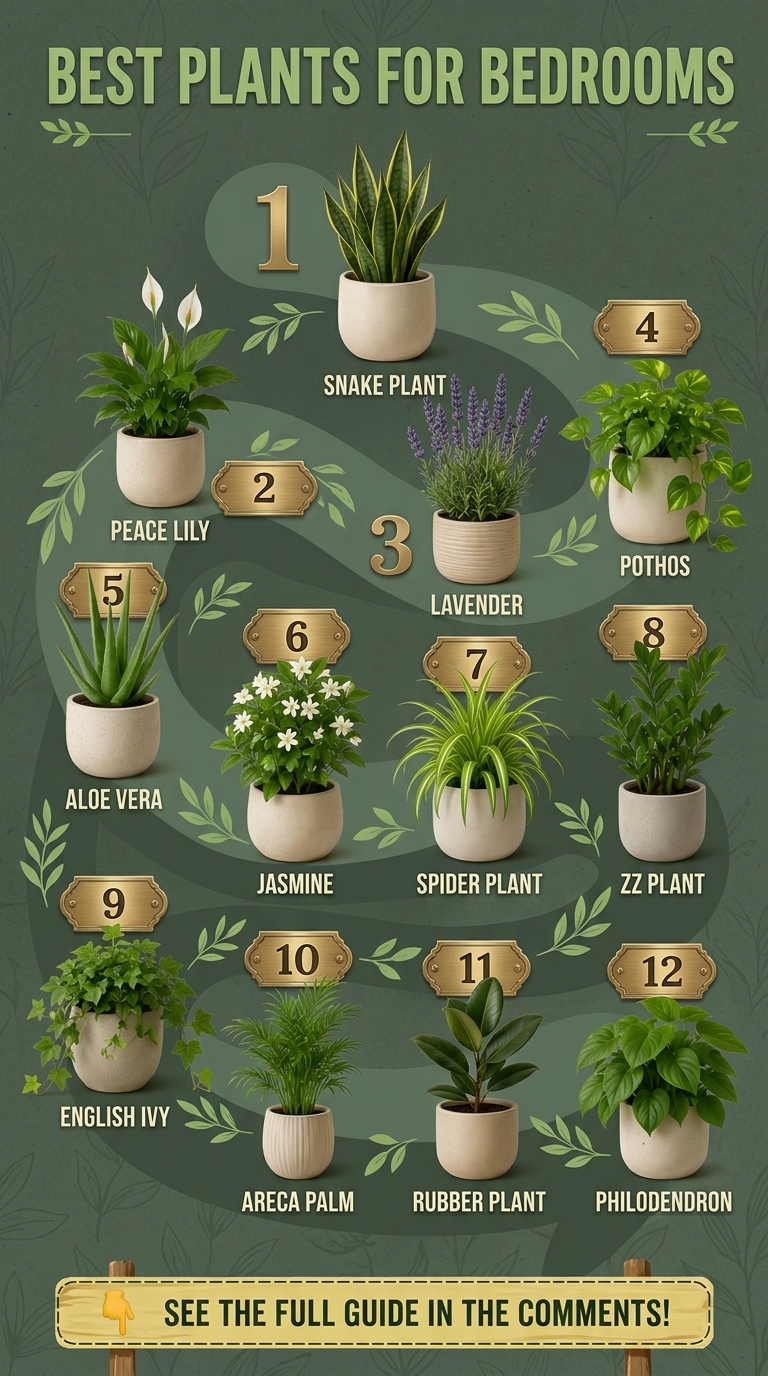
- Snake Plant (Dracaena trifasciata): Known for its architectural, upright leaves, the Snake Plant is incredibly hardy. It is one of the few plants that can tolerate neglect and varying light levels. Its ability to thrive in the corner of a bedroom makes it an excellent starter plant for beginners.
- Spider Plant (Chlorophytum comosum): The Spider Plant is highly adaptable and produces charming ‘pups’ that can be propagated into new plants. They add a soft, cascading aesthetic to bedside tables or hanging planters.
- Peace Lily (Spathiphyllum): With its elegant white blooms and dark green foliage, the Peace Lily is a classic choice. It prefers indirect light and clearly ‘tells’ you when it needs water by drooping slightly, making it a very intuitive plant to care for.
- English Ivy (Hedera helix): If you are looking to save surface space, English Ivy is an excellent trailing plant. It can be trained to climb a trellis or allowed to spill over the edge of a tall bookshelf, adding vertical interest to your room.
Practical Care Tips for Bedroom Success
Keeping your bedroom plants alive requires understanding that the bedroom is a living space, not a greenhouse. Follow these guidelines to ensure your plants flourish:
- Assess Your Light: Most bedrooms do not have full-sun exposure. Before buying a plant, observe how much natural light reaches the spot where you intend to place it. If the room is dark, stick to low-light tolerant varieties like the Snake Plant.
- Mind the Water: Overwatering is the most common cause of houseplant failure. Always check the top inch of soil with your finger; if it feels damp, wait a few more days. Proper drainage is essential, so ensure all your pots have drainage holes at the bottom.
- Clean the Leaves: Dust can accumulate on broad leaves, which hinders the plant’s ability to photosynthesize. Once every few weeks, gently wipe down the leaves with a damp cloth to keep them healthy and vibrant.
- Mind Your Pets: If you share your bedroom with cats or dogs, always check the toxicity levels of a plant before bringing it home. Many popular houseplants can be harmful if ingested, so choose pet-safe varieties like the Spider Plant if you have curious animals in the house.
By thoughtfully choosing and placing your plants, you can turn your bedroom into a tranquil retreat. Remember that the goal is to enhance your comfort, not to add more chores to your daily routine. Start with one or two resilient plants and observe how they change the atmosphere of your space, eventually expanding your collection as you become more comfortable with their care.