


Understanding the Science of Companion Planting
In the world of home gardening, we often focus on the individual needs of our plants—sunlight, soil pH, and moisture levels. However, one of the most critical elements of a successful harvest is understanding plant relationships. Not every vegetable is a friendly neighbor. When incompatible plants are placed side-by-side, you may notice stunted growth, increased pest pressure, or poor yields. This concept, known as companion planting, is rooted in the way plants influence the soil environment and surrounding air quality through root secretions and chemical emissions.
The Risks of Poor Placement
Why do some vegetables struggle near each other? The primary reasons are usually competition for resources or the unintentional transmission of pathogens. Some plants have deep, aggressive root systems that can physically crowd out neighboring vegetables. Others, like the brassica family, are heavy feeders that deplete the soil so rapidly that nearby weaker plants simply starve. Additionally, placing plants that are susceptible to the same diseases next to each other creates a perfect breeding ground for blights and wilts to spread rapidly through your garden beds.
Common Planting Blunders to Avoid
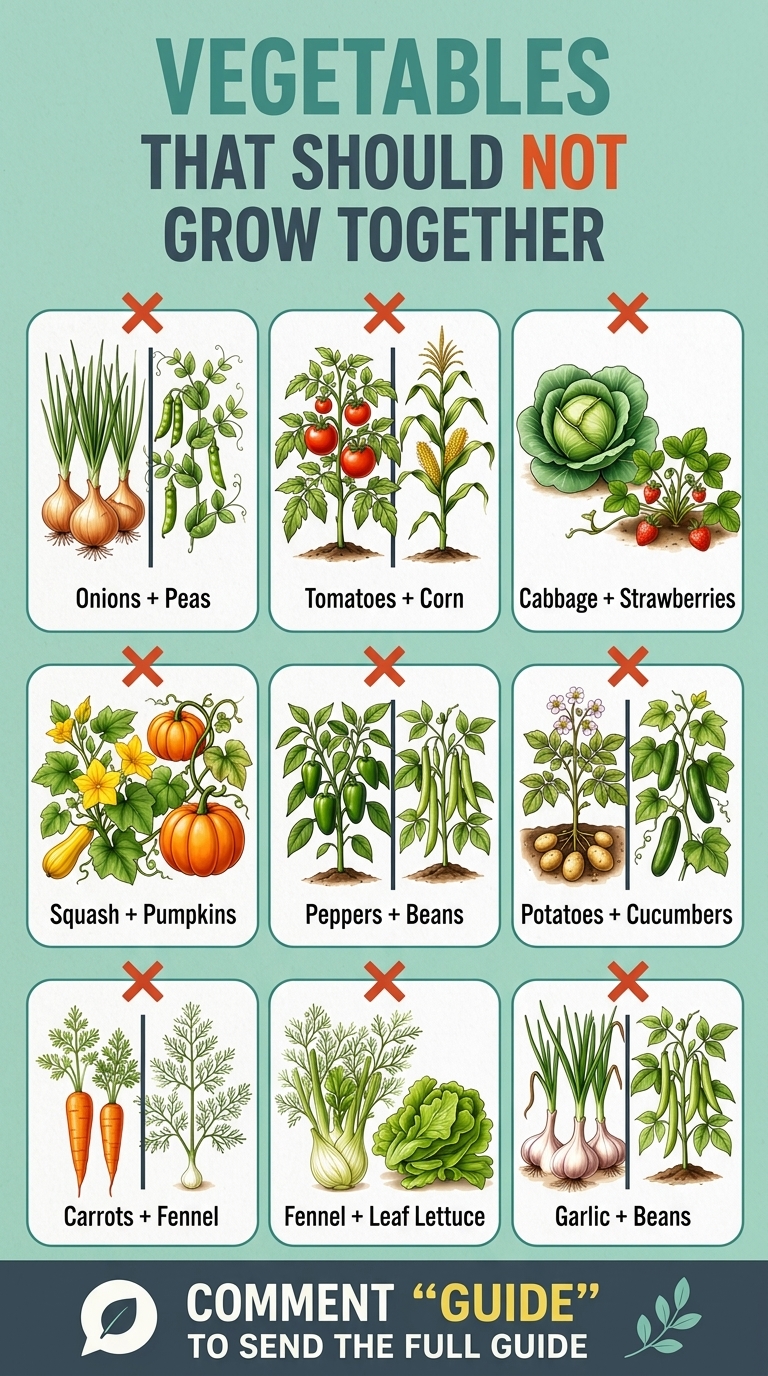
- Tomatoes and Potatoes: Both of these plants belong to the nightshade family and are susceptible to the same blights. If you plant them together, you increase the risk of rapid disease transmission. Furthermore, they are both heavy feeders, which means they will compete aggressively for nutrients, leaving both plants lacking.
- Onions and Beans: While onions are wonderful for deterring many pests, they are not friends with legumes. Onions and garlic can inhibit the growth of pole and bush beans by releasing compounds into the soil that stunt the nitrogen-fixing bacteria beans rely on to flourish.
- Lettuce and Broccoli: While this seems like a classic salad combination, broccoli is a heavy feeder that can shade out lettuce too early in the season. If you must grow them together, ensure the broccoli is placed on the north side of the bed so it does not cast too much shadow on the smaller lettuce heads.
- Cucumbers and Aromatic Herbs: Many gardeners love the idea of a diverse garden, but planting cucumbers near strong-scented herbs like rosemary or sage can sometimes affect the flavor of the cucumber fruit. It is generally best to give cucumbers their own dedicated trellis space.
Practical Tips for a Harmonious Garden Layout
To prevent these issues, begin by mapping out your garden before you even buy your seeds. Group plants by family, but ensure that those within the same family are not clustered too tightly if they share the same disease profiles. Instead, use ‘buffer plants’—such as marigolds, nasturtiums, or even rows of carrots—to act as biological barriers between rows of heavier crops.
Rotation is also key. Even if your layout worked well this year, avoid planting the same crops in the exact same spot next season. This practice minimizes the buildup of soil-borne pathogens that target specific plant families. If you are unsure about a pairing, keep the ‘Three Sisters’ method in mind as a gold standard: corn, beans, and squash work together because the corn provides a stalk for the beans to climb, the beans fix nitrogen for the soil, and the squash leaves act as a living mulch to retain moisture.
The Takeaway
Successful gardening is about observation. Keep a garden journal where you note exactly where you planted each variety and how the yield compared to previous years. If you notice a specific bed consistently struggles, look at what was growing next to the crop. By being mindful of who stands next to whom, you are not just growing vegetables; you are building an ecosystem where each plant has the space and the chemical environment it needs to reach its full potential.