


Every experienced gardener has at least one story about the season that got away—when, despite diligent watering and high-quality seeds, the harvest was stunted, yellowing, or simply non-existent. Often, the culprit isn’t a lack of effort or green thumb, but a fundamental mismatch between the chosen crop and the soil beneath the surface. Understanding your soil texture is not just a scientific exercise; it is the most effective way to ensure your plants have the infrastructure they need to thrive.
The Three Pillars of Soil Texture
Soil texture is defined by the proportion of three particles: sand, silt, and clay. These particles influence everything from how well a plant can anchor its roots to how efficiently nutrients are delivered. By learning to work with your specific soil type rather than fighting against it, you can transform your gardening success rate.
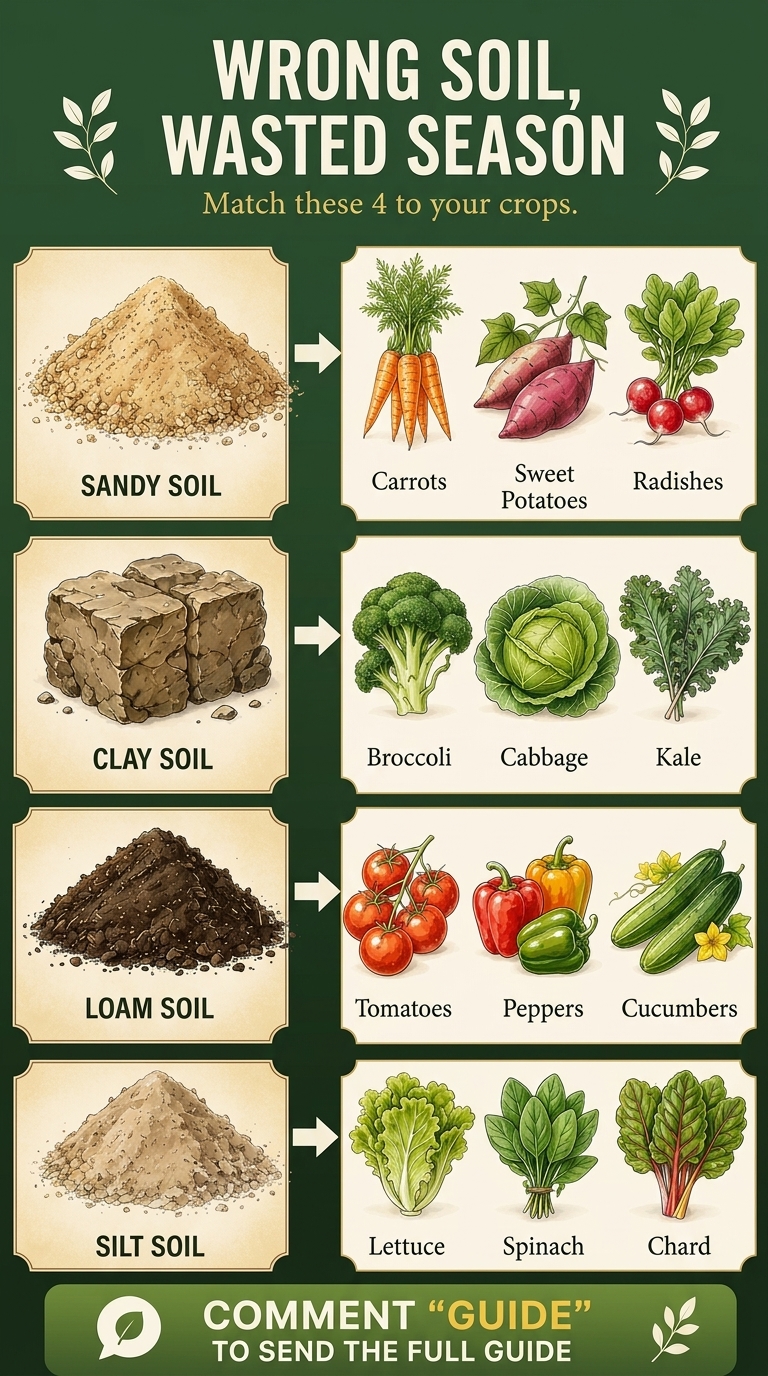
1. Sandy Soil: The Drainage King
Sandy soil is composed of large particles, which creates significant space between them. This means water drains away quickly and air circulation is excellent. While this prevents waterlogging, it also means nutrients can wash away easily.
- Best Crops: Root vegetables are the stars here. Carrots, sweet potatoes, radishes, and parsnips thrive because the loose, airy structure allows their roots to penetrate deep into the ground without hitting resistance, resulting in straight, uniform produce.
- Gardening Tip: Since sand leaches nutrients, add generous amounts of organic compost or aged manure each season to improve water and nutrient retention.
2. Clay Soil: The Nutrient Powerhouse
Clay particles are incredibly small and pack together tightly. This makes clay soil heavy and prone to compaction, but it is also exceptionally rich in nutrients. Because it holds water so well, it can stay moist long after sandy soil has dried out.
- Best Crops: Heavy feeders and moisture-lovers flourish in clay. Broccoli, cabbage, cauliflower, and cucumbers all benefit from the steady supply of moisture and nutrients that clay provides throughout the growing season.
- Gardening Tip: To prevent compaction, avoid stepping on your garden beds. Incorporating organic matter like shredded leaves or straw helps break up the clay over time, creating a more manageable crumb structure.
3. Silt Soil: The Balanced Middle Ground
Silty soil sits between sand and clay. It is characterized by smooth, flour-like particles that are smaller than sand but larger than clay. It is often found in river valleys and is incredibly fertile, holding moisture well while still allowing for decent drainage.
- Best Crops: Leafy greens are perfectly suited for the moisture-retentive properties of silt. Lettuce, spinach, chard, and kale grow rapidly in these conditions because the soil stays cool and consistently damp, which is exactly what these fast-growing crops crave.
- Gardening Tip: Silt is prone to crusting over after heavy rain, which can hinder seedling emergence. Keep the soil surface covered with a thin layer of mulch or compost to maintain a friable, soft top layer.
How to Determine Your Soil Type
If you aren’t sure what you are working with, perform a simple jar test. Take a handful of soil, place it in a clear jar, and fill the rest with water. Shake it well and let it settle for 24 hours. The sand will settle at the bottom, the silt in the middle, and the clay on top. Seeing these layers will tell you exactly what percentage of each you have.
Working Toward the Ideal: The Loam Goal
While every crop has a preference, the ultimate goal for almost any vegetable gardener is ‘loam.’ Loam is the perfect balance of sand, silt, and clay—enough sand for drainage, enough clay for nutrient retention, and enough silt for structure. Regardless of where you are starting, you can nudge your soil toward this ideal balance by regularly adding organic matter. Compost is the great equalizer; it improves drainage in clay, increases moisture retention in sand, and adds the structure needed to keep silt from crusting. By aligning your crop selection with your current soil while consistently building organic matter, you set the foundation for a garden that produces a heavy harvest year after year.