


Deep shade is often misunderstood by home gardeners as a limitation, but in reality, it is an invitation to cultivate a tranquil, woodland-inspired sanctuary. While many gardeners covet the sunny borders that support traditional roses and vegetables, those with deep shade areas—such as north-facing walls, under dense evergreen canopies, or alleyways between homes—possess a unique opportunity to grow plants with sophisticated foliage and delicate, ethereal blooms.
Understanding Your Shade
Before selecting your plant palette, it is important to define the type of shade you are working with. Deep shade is not an absence of life, but a specific environment defined by filtered light. Most shade-loving plants thrive in indirect light or dappled sunlight. Observing your garden throughout the day is essential. If you cannot see the sun at all, you are dealing with deep shade, which requires plants that have evolved specifically to photosynthesize efficiently in low-light conditions.
The Pillars of a Shade Garden
To create a garden that remains vibrant throughout the season, you should focus on plants that offer more than just a fleeting moment of color. By layering textures and bloom times, you can turn a dark corner into a focal point.
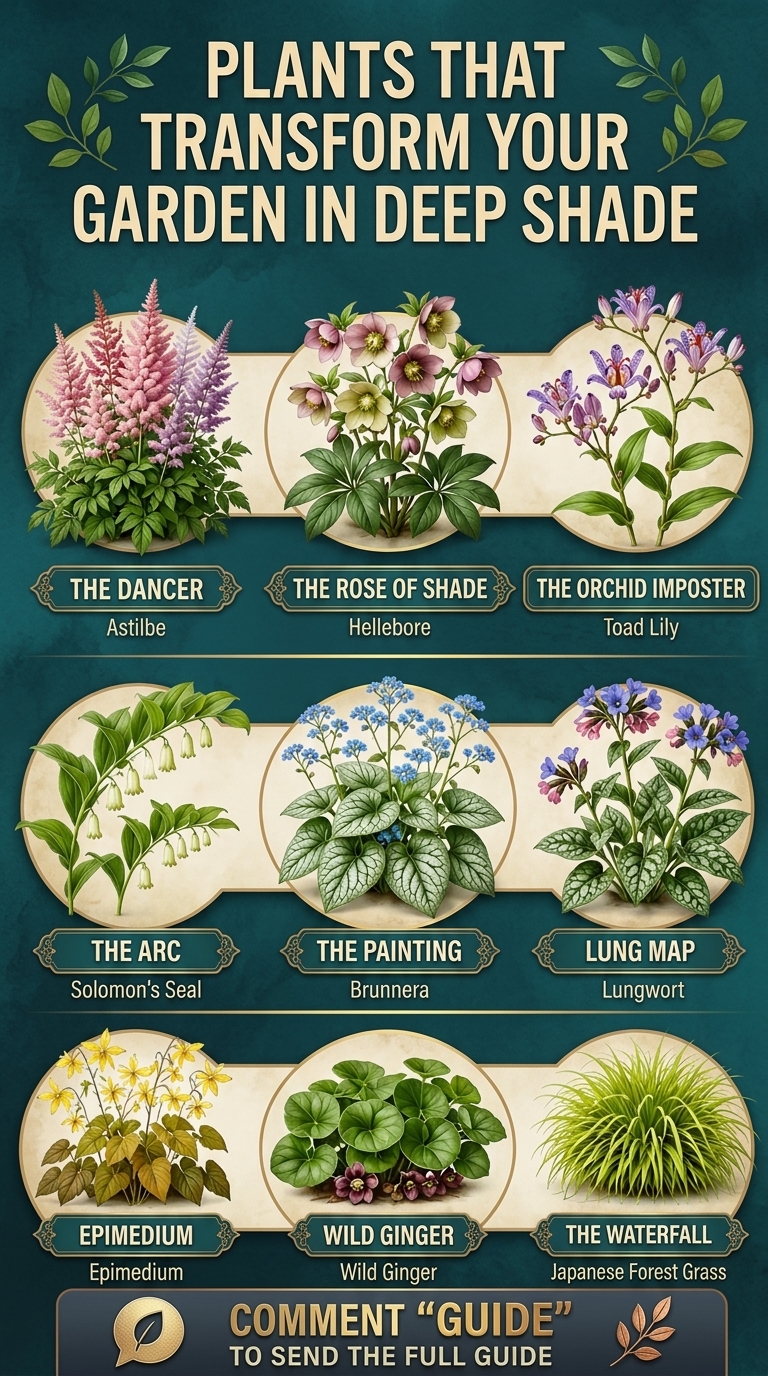
- Astilbe: The Texture Master. Often called the ‘false goat’s beard,’ Astilbe is a powerhouse in the deep shade. Its fern-like foliage provides a lush, tropical feel, while its tall, feathery plumes bring vertical interest. They require consistently moist soil, making them perfect for those areas of the garden that naturally hold water.
- Hellebores: The Winter Warrior. Known as the ‘Lenten Rose,’ Hellebores are indispensable for the shade gardener. They are remarkably resilient and often emerge from the frozen ground while winter still lingers. Their thick, leathery leaves are evergreen, providing structural interest even when the rest of the garden is dormant. They are also deer-resistant, which is a major advantage for woodland-style landscapes.
- Toad Lily (Tricyrtis): The Late-Season Surprise. Just when your garden begins to look tired in late summer and autumn, the Toad Lily provides an exotic display. These plants produce unique, orchid-like flowers that are speckled with vibrant spots. They are perfect for softening the edges of paths where you can get a close look at their intricate details.
Cultural Tips for Success
Gardening in the shade requires a different approach to maintenance than gardening in full sun. Because you are often planting under trees or against structures, the soil conditions can be challenging.
First, prioritize soil amendments. Shade-loving plants usually prefer rich, woodland soil that is high in organic matter. Incorporating compost or leaf mold into your planting holes will improve water retention and provide the necessary nutrients for deep-shade plants to thrive. Unlike sun-loving perennials that may demand heavy fertilization, shade plants often prefer a slower, steady supply of organic matter.
Second, manage moisture wisely. While shade areas evaporate water more slowly than sunny patches, they are often located under tree canopies where roots compete for moisture. Mulching is your best defense. A thick layer of wood chips or shredded leaves will suppress weeds, retain moisture, and slowly feed the soil, mimicking the natural forest floor.
Designing for Light
When working with a dark palette, use variegated foliage to your advantage. Plants with white or yellow variegation act as ‘light reflectors’ in the garden, brightening up deep shade and drawing the eye into the space. Pair these with dark-leaved hostas or the deep greens of Hellebores to create a high-contrast display that makes your shade garden feel intentional and polished.
By choosing plants that are adapted to the unique environment of your garden, you can transform the most challenging corners into the most peaceful retreats. Embrace the shade, focus on texture, and enjoy the beauty of the woodland aesthetic.