


When most gardeners think of growing lettuce, they envision long, expansive rows in a raised bed or a large vegetable patch. However, one of the most rewarding methods for urban gardeners or those with limited porch space is high-density container gardening. By rethinking your spacing, you can successfully grow 12 heads of lettuce in a single 12-inch pot, providing a near-continuous harvest for months on end.
Why High-Density Planting Works for Lettuce
Lettuce is a unique crop because it is relatively shallow-rooted. Unlike tomatoes or peppers, which require significant soil depth and root room, lettuce thrives in containers that offer surface area rather than deep vertical volume. When you plant densely in a wide, shallow pot, you create a self-shading canopy. This micro-environment helps keep the soil surface cool and moist, which is critical for preventing lettuce from bolting (going to seed) during the warmer parts of the season.
Selecting the Right Container and Variety
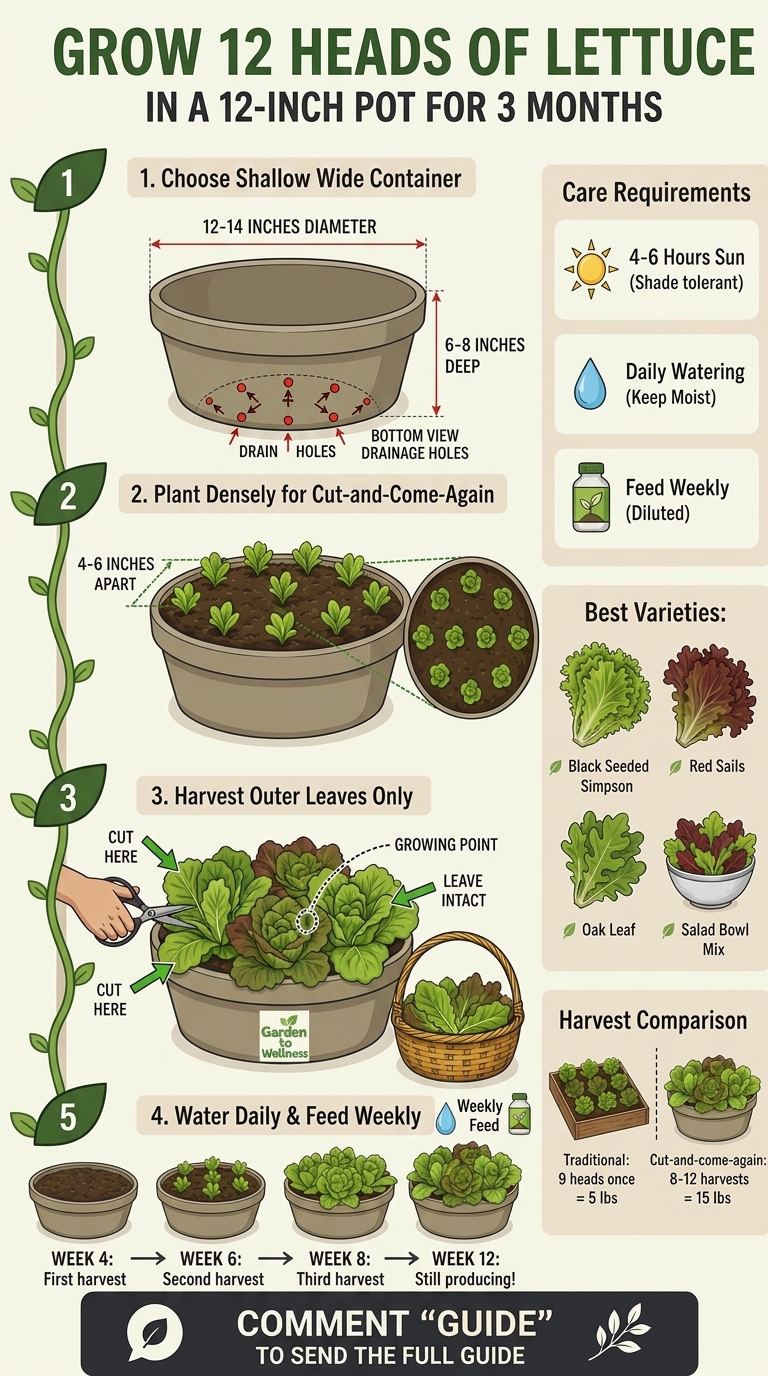
For this technique, aim for a container that is approximately 12 inches in diameter. Because the depth requirement for lettuce is minimal, a bowl-shaped planter or a standard nursery pot about 6 to 8 inches deep is sufficient. Ensure your container has adequate drainage holes; while lettuce loves moisture, it cannot tolerate waterlogged roots.
Choosing the right variety is just as important as the pot. Look for ‘loose-leaf’ or ‘cut-and-come-again’ varieties rather than ‘heading’ lettuces like Iceberg. Varieties like Red Sails, Black Seeded Simpson, or any buttercrunch mix are ideal because they allow you to harvest individual leaves without killing the entire plant.
The Planting Process
To fit 12 plants into a 12-inch pot, you must adopt a grid-like spacing strategy. Start by filling your pot with a high-quality, lightweight potting mix amended with a bit of compost. Avoid using garden soil, as it becomes too compacted in pots, which will stunt your lettuce growth.
- Distribute your seeds or starts evenly across the surface of the soil.
- Place one plant in the center and space the others in a ring around the perimeter, roughly 3 inches apart from each other.
- Ensure you are planting in a location that receives at least four to six hours of sunlight. If you live in a particularly hot climate, prioritize morning sun and provide some afternoon shade.
Maintaining Your High-Density Lettuce Patch
Success with dense container gardening relies on consistent maintenance. Because 12 plants are drawing nutrients and moisture from a single container, the margin for error is smaller than it would be in the ground.
- Watering: Check your pot daily. In the summer, container soil dries out rapidly. If the top inch of soil feels dry to the touch, it is time to water. Keep the soil consistently moist but not swampy.
- Feeding: Because you are cramming 12 plants into a small volume of soil, they will exhaust available nutrients quickly. Use a liquid seaweed or a diluted balanced organic fertilizer once every week. This keeps the leaves growing tender and sweet, even as the plants mature.
- Harvesting: This is the secret to a three-month harvest. Never pull up the whole plant. Instead, practice ‘leaf-stripping.’ Using sharp garden shears, harvest only the oldest, outermost leaves from each of the 12 heads. This allows the inner ‘heart’ of each lettuce plant to continue photosynthesizing and pushing out new growth.
Troubleshooting and Longevity
Even with perfect care, lettuce is a cool-season crop. As temperatures climb, your lettuce will naturally want to flower. To extend the life of your container, keep an eye out for signs of bitterness in the leaves. If the leaves become jagged or the plant begins to elongate, it is a sign of bolting. By keeping the soil cool and harvesting regularly, you can trick the plants into staying in their vegetative state for much longer. If your plants do eventually bolt, simply pull them out, refresh the soil with a handful of compost, and start a new round of seeds for another three months of fresh, crisp greens.