


When you embark on a container gardening journey, it is easy to focus all your attention on picking the perfect seeds or selecting a beautiful decorative pot. However, the most critical factor in your plant’s long-term health is often the most overlooked: the medium inside the container. Using simple garden soil in a pot is a recipe for frustration, as it behaves very differently when confined within four walls compared to the open earth.
The Critical Difference Between Garden Soil and Potting Mix
The primary reason you should never dig up soil from your yard to fill a pot is drainage and aeration. Garden soil is dense, containing clay, silt, and organic matter that settles over time. When placed in a container, this soil compacts easily, especially after being watered. This compaction chokes out oxygen from the root zone and creates a waterlogged environment that leads to root rot. In contrast, a high-quality potting mix is engineered to be lightweight, porous, and nutrient-rich.
Understanding the Components of Potting Mix
A good potting mix is not actually “soil” at all. It is a soilless blend designed specifically for the confined space of a pot. Most reputable commercial mixes are built from a few key ingredients that provide structure and moisture control:
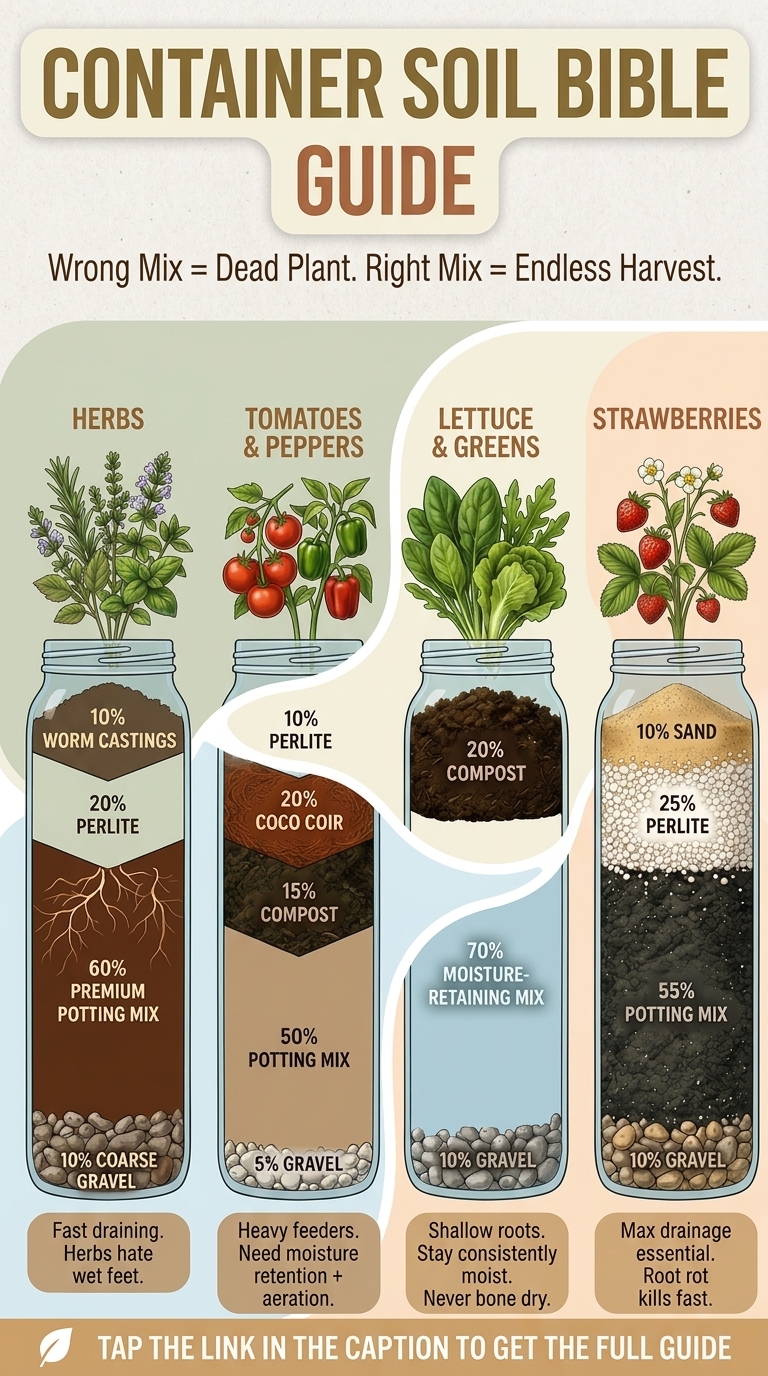
- Peat Moss or Coconut Coir: These provide the base for the mix. They hold onto water like a sponge while remaining light enough to allow for airflow.
- Perlite or Vermiculite: These are the small white volcanic rocks or mineral flakes you often see in the mix. They create tiny air pockets, ensuring the roots can breathe and excess water can drain away easily.
- Compost or Aged Bark: These ingredients offer the slow-release organic nutrients that plants need to thrive throughout the growing season.
Why Your Plants Need the Right Medium
Think of your container as a life-support system. Because the roots are trapped, the potting mix must do the heavy lifting that the earth would otherwise do naturally. When you use the correct medium, you provide a stable environment where roots can anchor themselves and easily access water and nutrients. If the medium is too heavy, the plant spends its energy trying to survive in a suffocating environment. If it is too light or lacks quality ingredients, the plant may starve or dry out too quickly. Providing the right “dirt” ensures that your vegetables are robust, your flowers are vibrant, and your yields are plentiful.
Practical Tips for Success
Choosing the right mix is only the beginning. To keep your container plants healthy, consider these maintenance tips:
- Refresh your soil: Over time, the organic components in a potting mix break down, and nutrients are washed away by repeated watering. Plan to replace or amend your potting soil with fresh compost at the start of every growing season.
- Avoid over-compacting: When planting, gently firm the mix around the roots. Do not press down too hard, as you want to preserve those essential air pockets that keep the root system healthy.
- Water with intention: Because potting mixes are designed to drain well, they can dry out faster than ground soil, especially on hot, windy days. Always check the moisture level an inch below the surface before watering.
- Match the mix to the plant: Some plants, like cacti or succulents, require a mix with much more grit and sand, while moisture-loving vegetables might appreciate a mix with a higher percentage of coconut coir.
By investing in a high-quality potting mix, you are setting the foundation for a productive garden. Whether you are growing tomatoes on a balcony or herbs on a windowsill, remember that healthy plants always start from the ground up.