


Why Fast-Growing Crops Are Essential for Every Gardener
Gardening is often described as a lesson in patience, but there is immense value in balancing long-season crops like tomatoes or pumpkins with plants that provide a quick turnaround. For beginners, fast-growing vegetables offer a confidence boost and the joy of a near-instant reward. For experienced gardeners, these “sprint” crops are the perfect way to utilize bare patches in the garden, fill gaps between seasonal plantings, or maximize yield in small urban spaces.
The Benefits of Short-Season Vegetables
Integrating fast-maturing varieties into your garden plan serves several strategic purposes. First, they allow you to harvest multiple times throughout a single season. Second, they are excellent for succession planting, ensuring you are never without fresh produce. Finally, many of these crops thrive in the cooler shoulders of the season—early spring and late autumn—when other, more sensitive vegetables might struggle.
Top Picks for a High-Speed Harvest
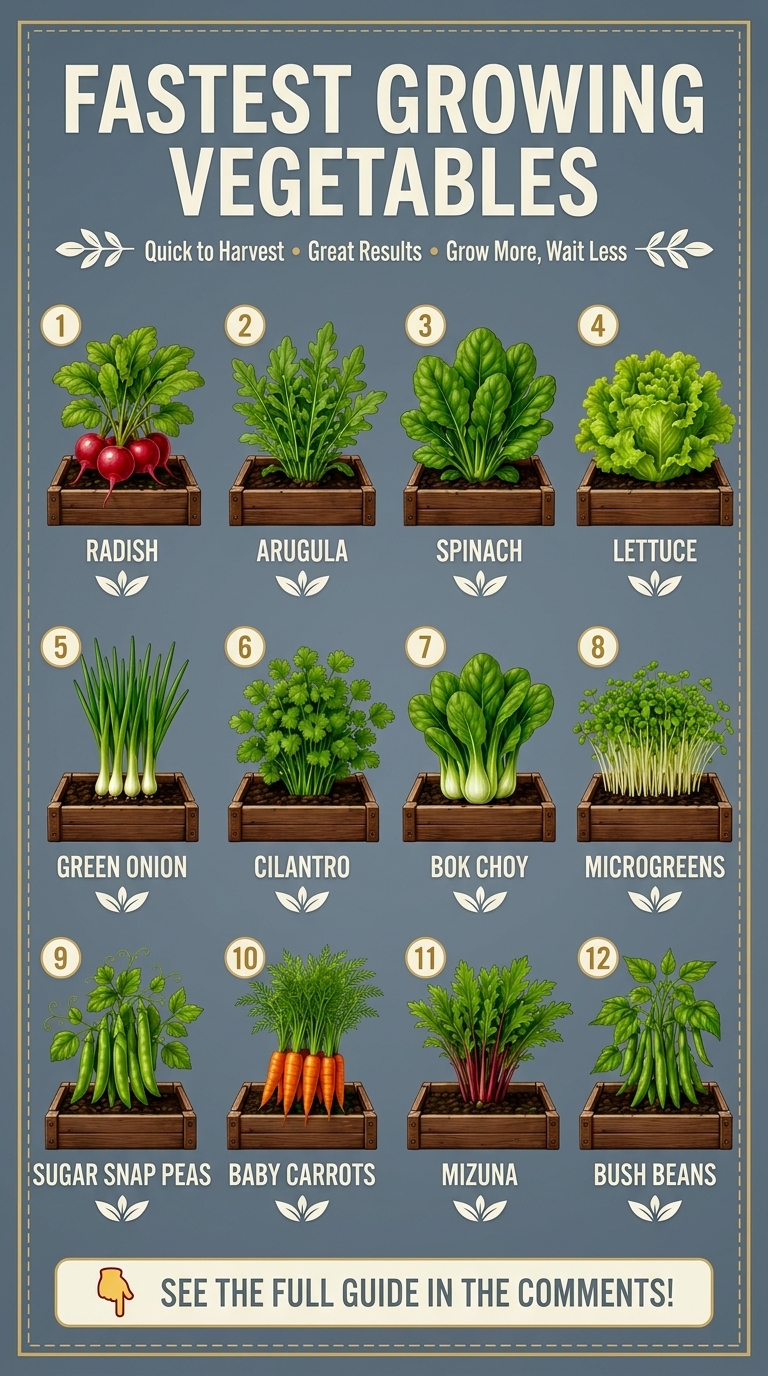
- Radishes: The undisputed champion of speed. Many varieties, such as ‘French Breakfast’ or ‘Cherry Belle,’ can go from seed to harvest in as little as 25 to 30 days. Because they are so fast, you can sow a small row every two weeks to keep a continuous supply moving through your kitchen.
- Microgreens: If you are looking for speed, look no further than your windowsill. Microgreens are simply the young seedlings of vegetables like arugula, kale, radish, and basil. They are typically ready to harvest 7 to 14 days after germination. They provide an intense burst of flavor and a massive nutritional punch in record time.
- Baby Salad Greens: Lettuce, spinach, and arugula do not need to reach full maturity to be delicious. By harvesting “baby” leaves, you can enjoy a fresh garden salad in just 3 to 4 weeks. Many of these varieties are “cut-and-come-again,” meaning you can harvest the outer leaves and allow the center to keep growing for repeated harvests.
- Green Onions (Scallions): While they take longer than a radish, green onions are remarkably low-maintenance. If you start from sets rather than seeds, you can be harvesting fresh onions in just a few weeks. They occupy very little space, making them perfect for containers or the edges of raised beds.
- Baby Carrots: Opting for short-root varieties like ‘Nantes’ or round varieties like ‘Paris Market’ allows for a faster harvest than standard long-rooted carrots. These can be pulled at the baby stage in about 45 to 50 days, offering a sweet, tender treat.
How to Maximize Your Quick-Crop Success
Success with fast-growing crops relies on consistency rather than complexity. Because these plants have short lifespans, they need steady access to nutrients and water to reach their potential quickly.
- Succession Planting: Don’t plant an entire packet of seeds at once. If you plant a whole row of radishes on day one, you will end up with too many radishes to eat before they become woody or bitter. Instead, sow small, manageable amounts every two weeks.
- Quality Soil Preparation: Since these plants grow rapidly, they need loose, friable soil. Ensure your planting area is free of rocks and debris, especially for root vegetables, to encourage fast, straight growth. Incorporating a bit of compost before planting provides the necessary nitrogen for leafy greens to sprout quickly.
- Consistent Moisture: Fast-growing vegetables are often sensitive to drought. If the soil dries out completely, growth will stall. A consistent watering schedule is the secret to ensuring your greens remain tender and your radishes remain crisp.
- Strategic Placement: Many fast-growing crops prefer cooler temperatures. Use these vegetables to fill the garden when it is too cold for peppers or eggplants. By the time the summer heat arrives, you will have already finished your harvest, and you can pull the spent plants to make room for your summer heat-loving crops.
By shifting your perspective to include these high-speed vegetables, you transform your garden from a passive space that requires months of waiting into an active, productive food system. Whether you are limited by a balcony or working on a sprawling homestead, these quick crops ensure that you are always just a few weeks away from a fresh, homegrown meal.