


Creating a beautiful, thriving indoor garden doesn’t always require dozens of individual pots cluttering every surface of your home. One of the most effective ways to elevate your space is through intentional container grouping. By pairing compatible plants in a single vessel, you create a lush, professional-looking arrangement while simplifying your care routine. The secret lies in understanding the symbiotic needs of your botanical companions.
Why You Should Combine Your Houseplants
Plant pairing is more than just an aesthetic choice; it creates a microclimate within your pot. When plants are grouped together, they often retain humidity better than solitary plants. Furthermore, pairing plants with identical light and water requirements ensures that you aren’t fighting a constant battle to keep one specimen happy while the other suffers. From a design perspective, mixing textures, leaf shapes, and growth habits adds visual depth that a single plant simply cannot provide.
The Golden Rules of Compatibility
Before you start repotting, it is essential to follow two core rules: they must share the same light requirements and the same watering schedule. If you place a drought-tolerant succulent with a moisture-loving fern, one will inevitably suffer from root rot or dehydration. Always choose companions that share a similar ‘thirst’ level and light preference to ensure long-term success.
Tried-and-True Pairings for Beginners
If you are looking for foolproof combinations, these pairings are excellent places to start:
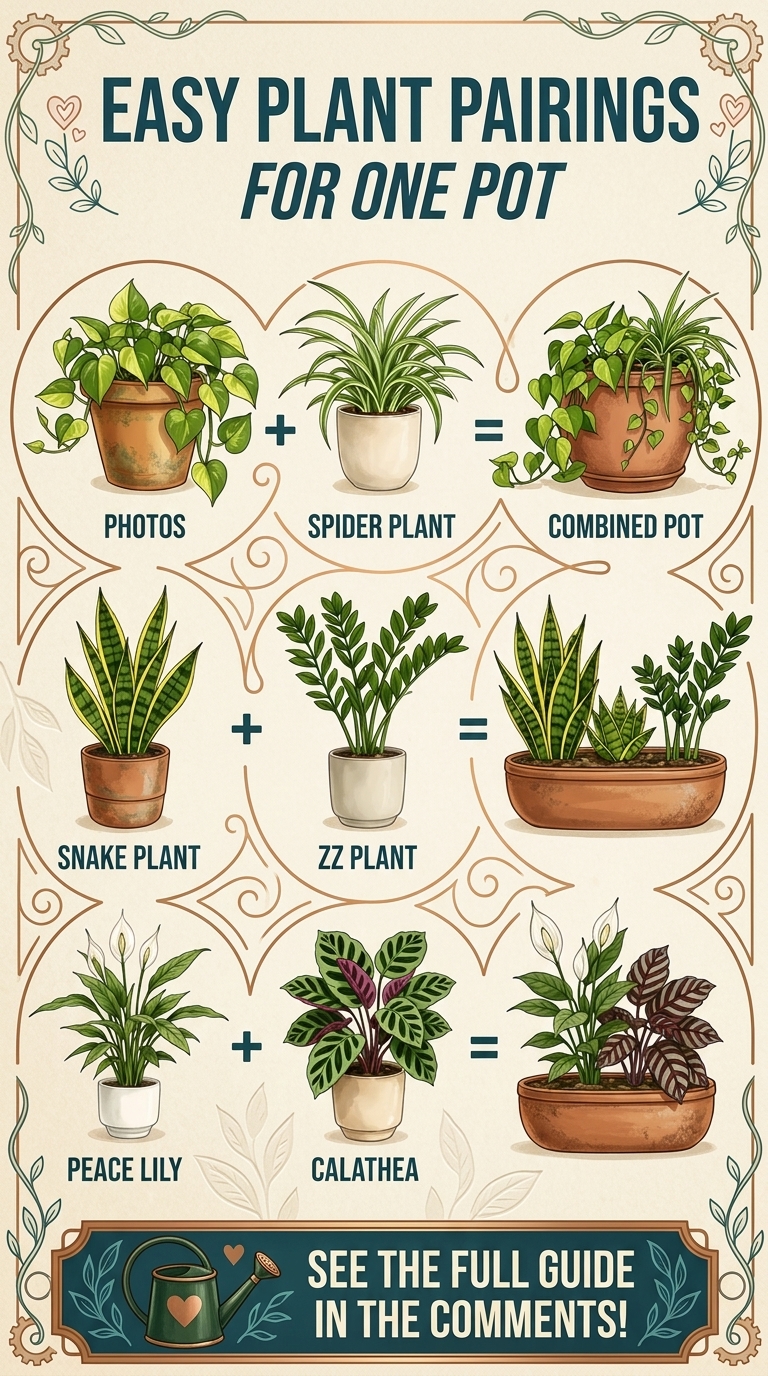
- Pothos and Spider Plant: These two are the workhorses of the indoor garden. Both are incredibly adaptable to various light conditions and offer a beautiful contrast in foliage. The trailing vines of the Pothos complement the arching, grass-like leaves of the Spider Plant, creating a full, tiered look. Both enjoy consistent moisture, making them an easy pair to manage.
- Snake Plant and ZZ Plant: For the low-light corners of your home, this is the ultimate ‘set it and forget it’ combination. Both are masters of surviving on neglect and thrive in environments where they are allowed to dry out completely between waterings. Their vertical, architectural growth habits create a sophisticated, modern aesthetic that works perfectly in minimalist decor.
- Peace Lily and Calathea: For the gardener who enjoys a bit more interaction with their plants, this pairing offers stunning foliage. Both plants enjoy higher humidity and appreciate slightly moist soil. The broad, dark leaves of the Peace Lily provide a perfect backdrop for the intricate, patterned leaves of the Calathea, resulting in a dramatic, lush display.
Practical Tips for a Successful Pot
When assembling your new container, consider these practical steps to ensure success:
- Choose the Right Container: Always ensure your container has adequate drainage holes. No matter how compatible the plants are, they will struggle if excess water remains trapped at the bottom of the pot.
- Check Root Systems: When planting, arrange your specimens so the root balls are comfortable. Do not overstuff the pot; leave a small amount of space between plants to allow for healthy airflow and future growth.
- Monitor Acclimation: After repotting, your plants may experience a brief period of shock. Keep them in a location that receives consistent, indirect light and check the soil moisture frequently during the first two weeks as they establish themselves in their new shared home.
- Pruning is Key: In a shared pot, one plant may occasionally grow faster than its partner. Don’t be afraid to trim back the more aggressive grower to maintain the visual balance you originally intended.
By shifting your focus from individual plants to cohesive groupings, you can transform your indoor garden into a curated collection of thriving botanical art. Whether you are aiming for a cascading waterfall of vines or a sturdy, sculptural arrangement, the key is consistency and patience. Start with these simple pairings, observe how they interact with your home’s unique environment, and enjoy the rewarding process of watching them grow together.