


Understanding the Philosophy of Pruning
Pruning is often the most intimidating task for a home gardener, yet it is arguably the most vital for long-term health and productivity. The primary goal of pruning is not merely to keep a tree tidy, but to manipulate the plant’s energy. By removing specific wood, you encourage the tree to direct its resources toward fruit production rather than vegetative growth. However, treating every fruit variety the same is a recipe for disaster. Different species have unique growth habits and fruit-bearing cycles, requiring tailored techniques to maximize your harvest.
The Peach: The Annual Hard Prune
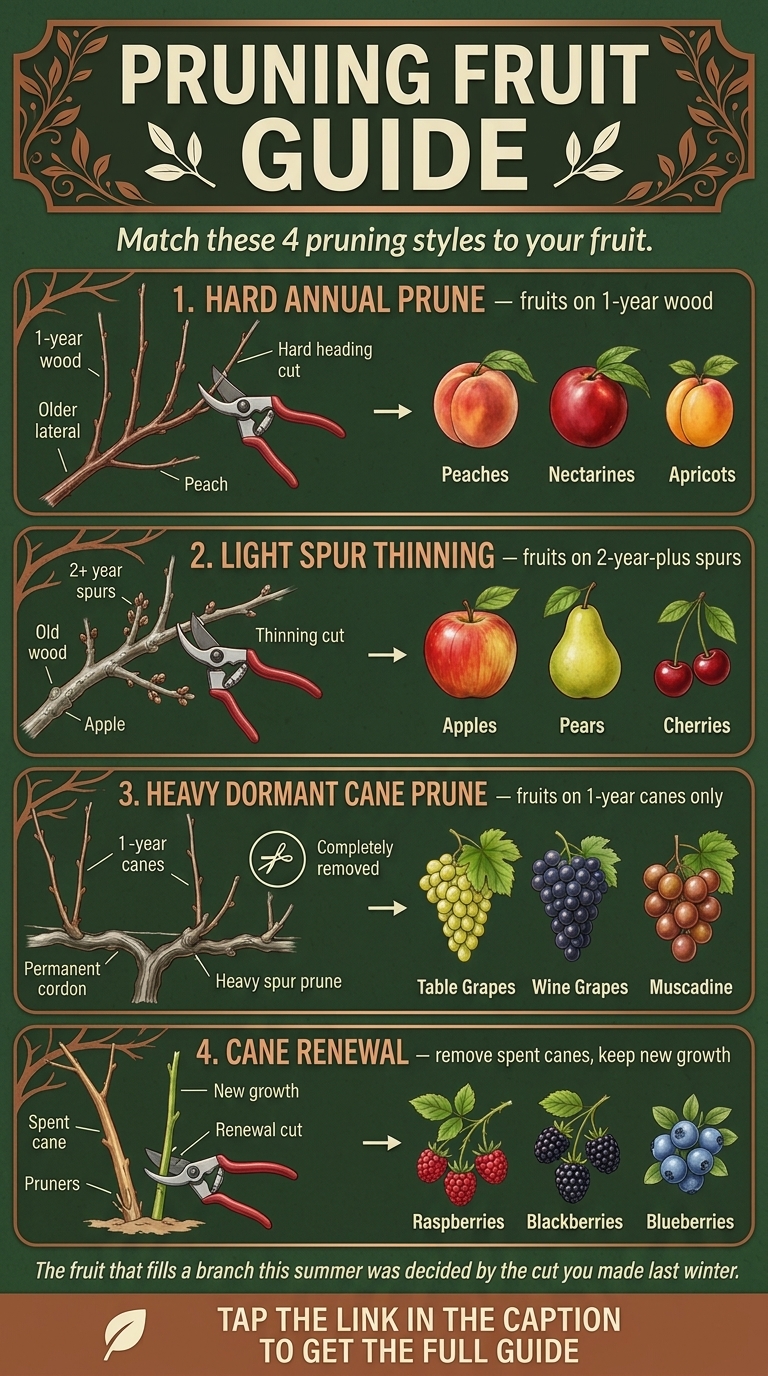
Peaches and nectarines are notoriously vigorous growers. They produce fruit on one-year-old wood, meaning if you do not encourage constant new growth, the tree will quickly stop producing. This is why peaches require a ‘hard’ annual prune. The objective is to remove older, non-productive wood and stimulate the growth of new, vibrant branches. Ideally, you want to maintain an open-center structure—often called a vase shape—which allows sunlight and air to reach the very center of the tree. This reduces humidity and prevents the fungal diseases to which peaches are particularly susceptible.
The Apple: Gentle Spur Thinning
Unlike peaches, apples bear fruit on ‘spurs’—short, slow-growing twigs that can produce fruit for many years. Consequently, a heavy-handed prune on an apple tree will strip away your future harvest. Apple trees require a much more measured approach. Focus your efforts on ‘thinning cuts’ rather than ‘heading cuts.’ Thinning involves removing an entire branch back to the main trunk or a larger branch to improve airflow. By gently thinning the crowded spurs, you prevent the fruit from becoming too small or crowded, which also helps the tree avoid biennial bearing—a cycle where the tree produces a heavy crop one year and nothing the next.
The Grapevine: Dormant Cane Pruning
Grapevines are perhaps the most aggressive climbers in the garden. Without strict management, they will prioritize vegetative growth over fruit production entirely. Grapes require heavy pruning while they are fully dormant in winter. There are two primary methods: cane pruning and spur pruning, depending on the variety. Cane pruning involves selecting a few vigorous, pencil-sized shoots from the previous season, trimming them back to a specific number of buds, and removing almost all other growth. By limiting the number of buds, you ensure the energy of the vine is concentrated into a smaller, higher-quality crop of grapes.
The Berry Patch: Cane Renewal
Berries such as blackberries and raspberries follow a biennial cane cycle. This means the individual cane grows in its first year, fruits in its second year, and then dies. Understanding this cycle is the secret to a perennial berry patch. Your pruning goal here is ‘cane renewal.’ After the harvest, you should identify and remove the old, spent canes that have already fruited. This makes room for the new, green primocanes to receive maximum sunlight and nutrients. By clearing away the old, dead material, you also significantly reduce the risk of pests and diseases overwintering in your berry patch.
Practical Tips for Success
- Always use sharp, clean bypass pruners. Ragged cuts from dull blades invite pathogens and slow down the healing process.
- Prune when the weather is dry. Rain can spread spores that infect open wounds on trees.
- Remember the ‘three D’s’: Always prioritize removing any branches that are Dead, Damaged, or Diseased, regardless of the species.
- Step back frequently. It is easy to get caught up in the rhythm of cutting. Pause every few minutes to look at the overall structure of the plant to ensure you haven’t removed too much.
- When in doubt, remove less. You can always prune more next season, but you cannot put a branch back once it has been removed.
By learning the specific needs of your fruit trees and vines, you transform pruning from a chore into an essential ritual of the garden. With the right technique, you aren’t just cutting back—you are shaping a more productive, resilient, and delicious future for your garden.