


Understanding the Complexity of Compost
Many gardeners treat compost as a singular product—a dark, crumbly ‘black gold’ that cures all soil ailments. While high-quality compost is indeed a cornerstone of organic gardening, not all organic matter is created equal. The decomposition process is a complex biological sequence, and the stage at which you apply your compost can fundamentally change how your plants perform. By tailoring your compost selection to the specific requirements of your crops, you can unlock better yields and healthier garden ecosystems.
The Role of Finished Hot Compost
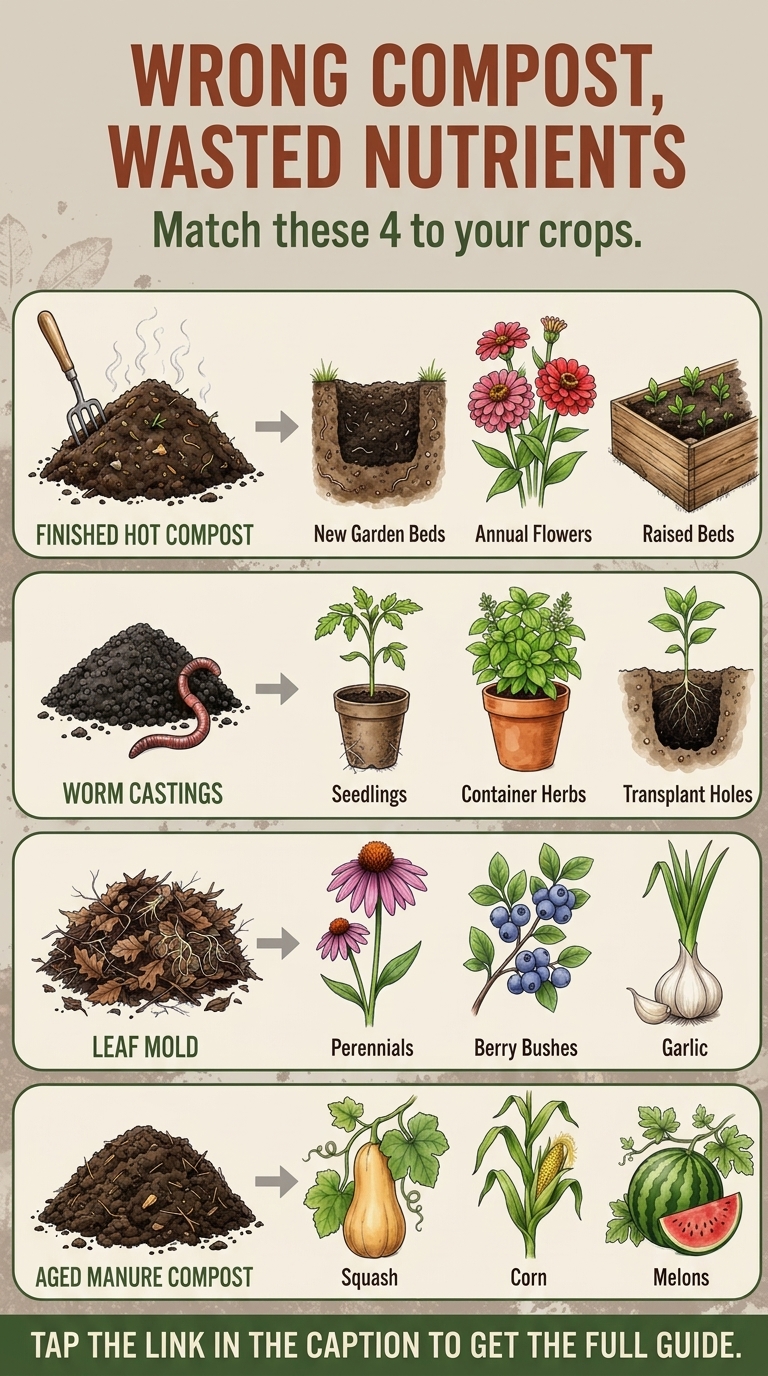
Hot composting is a high-energy process where the pile temperature is maintained between 130°F and 160°F. This heat is crucial for killing weed seeds and soil-borne pathogens. When the process is finished, the material is stable, dark, and earth-scented. This type of compost is the ultimate garden luxury for new beds and delicate flowers.
Because finished hot compost has gone through a rigorous breakdown, its nutrients are generally in a form that is readily available to plants. It is ideal for incorporating into new garden beds before planting, as it will not ‘steal’ nitrogen from the soil to finish decomposing. For flowers, which often require consistent, balanced nutrients to fuel blooms throughout the season, finished compost provides a slow-release fuel source without the risk of burning roots.
Understanding Decomposition Stages
To use compost effectively, you must learn to identify the stage of decomposition. Not every amendment belongs in every spot. Here are four common states of organic matter and how to best utilize them in your garden:
- Finished Compost: Dark, crumbly, and uniform in texture. This is your ‘go-to’ for flower beds, seed starting mixes, and amending soil before planting annual vegetables.
- Partially Decomposed Compost: Often called ‘coarse’ compost, this material still contains identifiable bits of leaves or twigs. It is best used as a top dressing or mulch for established shrubs and trees, where it will slowly break down and protect the soil surface.
- Leaf Mold: This is the result of fungal decomposition, specifically of deciduous leaves. It is structurally brilliant for soil, improving water retention and aeration. It is an excellent soil conditioner for perennial beds and can be used to lighten heavy clay soils.
- Raw Organic Matter: This refers to fresh grass clippings, straw, or kitchen scraps. These should only be used as a mulch layer far away from delicate stems, or as the ‘green’ inputs for a new composting pile. Incorporating raw material directly into the soil can lead to nitrogen tie-up, where microbes steal nitrogen from your plants to fuel the digestion of the fresh organic matter.
Practical Tips for Application
Matching your compost to your crop is about observing the plant’s life cycle. Vegetables, which are fast-growing and nutrient-hungry, benefit most from the finished, nutrient-dense compost mentioned above. Perennials and woody ornamentals, however, benefit from the slower, fungal-dominated decomposition of leaf mold or coarse compost, which mimics the natural forest floor environment they prefer.
To ensure your compost is ready for the garden, perform a simple squeeze test. Grab a handful of compost; it should hold its shape when squeezed but crumble easily when poked. If it is slimy, smells like ammonia, or is still hot to the touch, it is not finished and should remain in your composting bin. Applying immature compost can lead to stunted growth and nutrient deficiencies, as the microbes will continue to work in your soil rather than for your plants.
Creating a Long-Term Soil Strategy
Building a successful garden is a marathon, not a sprint. By understanding the stage of your compost, you stop treating it as mere trash disposal and start treating it as a targeted soil amendment. Begin by dedicating specific areas of your property to different stages of decomposition. Keep a hot bin for your vegetable patch needs, and maintain a separate, slower pile for leaves and garden debris to be used as mulch for your perennial zones. This strategy reduces waste, improves plant vitality, and makes you a much more intentional gardener.