


When you hear the term ‘hanging baskets,’ your mind likely jumps to overflowing petunias or trailing ivy. However, for the vegetable gardener with limited square footage, hanging baskets are a secret weapon. They utilize vertical space, improve airflow to prevent fungal diseases, and keep your produce away from ground-dwelling pests. The key to a successful vegetable basket lies in choosing companion plants that share similar water, light, and soil nutrient requirements.
The Why: Benefits of Vertical Vegetable Gardening
Gardening in containers, particularly suspended ones, changes the microclimate of your plants. Higher off the ground, these plants receive better air circulation, which is critical for preventing powdery mildew and other common blight issues. Furthermore, because hanging baskets have limited soil volume, choosing companion pairs that support each other—rather than compete—is essential for a bountiful harvest throughout the season.
Top Vegetable Pairs for Your Hanging Baskets
The secret to a thriving basket is pairing a ‘driller’ (a plant with deeper roots) with a ‘filler’ (a plant that covers the soil surface). This combination shades the soil, keeping the roots cool and moisture-retained while maximizing the use of every inch of potting mix.
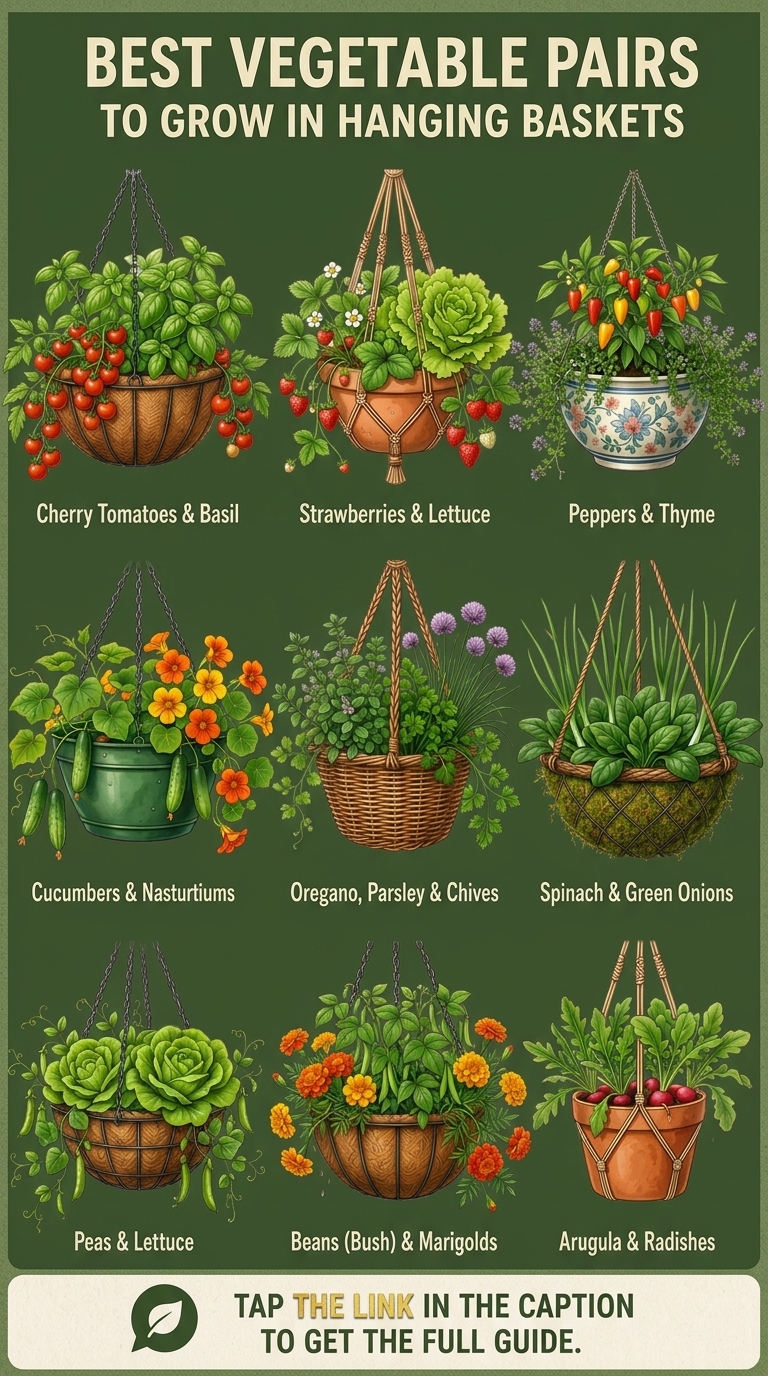
- Cherry Tomatoes and Sweet Basil: This classic culinary pairing works just as well in a basket as it does on your dinner plate. Cherry tomatoes, specifically ‘determinate’ or ‘trailing’ varieties, thrive in the sun. Basil acts as a living mulch, covering the soil to retain moisture. Additionally, some gardeners believe the strong scent of basil helps deter certain garden pests that might otherwise bother your tomatoes.
- Bush Beans and Nasturtiums: Bush beans are excellent candidates for hanging baskets because they do not require a trellis. Pairing them with trailing nasturtiums creates a visually stunning display. Nasturtiums are edible, providing peppery leaves and flowers for salads, and they act as a trap crop for aphids, drawing them away from your vegetable harvest.
- Chives and Lettuce: If your basket location gets partial shade, this is your power couple. Lettuce has a very shallow root system, making it perfect for the top layer of a basket. Chives, a perennial herb, can occupy the center or the edges. The fast-growing lettuce can be harvested leaf-by-leaf, while the chives provide a continuous supply of greens all season long.
- Strawberries and Thyme: While technically a fruit, strawberries are a staple in vertical gardening. They love the drainage that a hanging basket provides. Trailing thyme makes an excellent companion, as it is drought-tolerant, enjoys similar sun exposure, and its tiny flowers attract beneficial pollinators to your strawberries.
Practical Tips for Success
Hanging baskets dry out significantly faster than ground-level garden beds because they are exposed to wind and sun from all sides. To maintain a healthy pairing, keep these tips in mind:
- Choose the Right Potting Mix: Never use garden soil. It is too heavy and will compact, suffocating the roots. Use a high-quality, lightweight potting mix amended with coconut coir or peat moss to help with water retention.
- Consistent Hydration: During the height of summer, you may need to water your baskets twice a day. Check the moisture level by poking your finger an inch into the soil; if it feels dry, it is time to water.
- Strategic Feeding: Because nutrients leach out of hanging baskets quickly due to frequent watering, use a balanced, water-soluble organic fertilizer every two weeks. Avoid over-fertilizing, especially with leafy greens, as this can lead to excessive growth at the expense of fruit production.
- Harvest Often: The more you harvest your vegetables, the more the plant will produce. This is particularly true for lettuce, beans, and cherry tomatoes. Keeping the plants productive also helps prevent them from becoming top-heavy and wind-damaged.
By thoughtfully pairing your vegetables, you can turn a simple hanging basket into a high-yielding, space-saving kitchen garden. Start with one of these combinations this season and watch how much more productive your balcony or porch can become.