


The Importance of Vertical Space in Your Garden
When planning a raised bed garden, many beginners focus on surface area—how many square feet they can plant—while overlooking the vertical dimension. However, the depth of your soil is just as critical as the sunlight your plants receive. Matching your bed depth to the specific root system of your crops is a fundamental secret to higher yields, healthier plants, and more efficient water usage. When plants have enough room to extend their roots, they anchor better, absorb nutrients more efficiently, and become significantly more resilient against heat stress.
Understanding Root Architecture
Plants generally fall into three categories regarding root depth: shallow, medium, and deep. Trying to force a deep-rooted vegetable into a shallow bed results in stunted development, premature bolting, and smaller harvests. Conversely, planting shallow-rooted herbs in a massive, deep bed can lead to poor drainage issues and wasted soil resources. By categorizing your garden layout by depth, you create a more optimized environment for your vegetables to thrive.
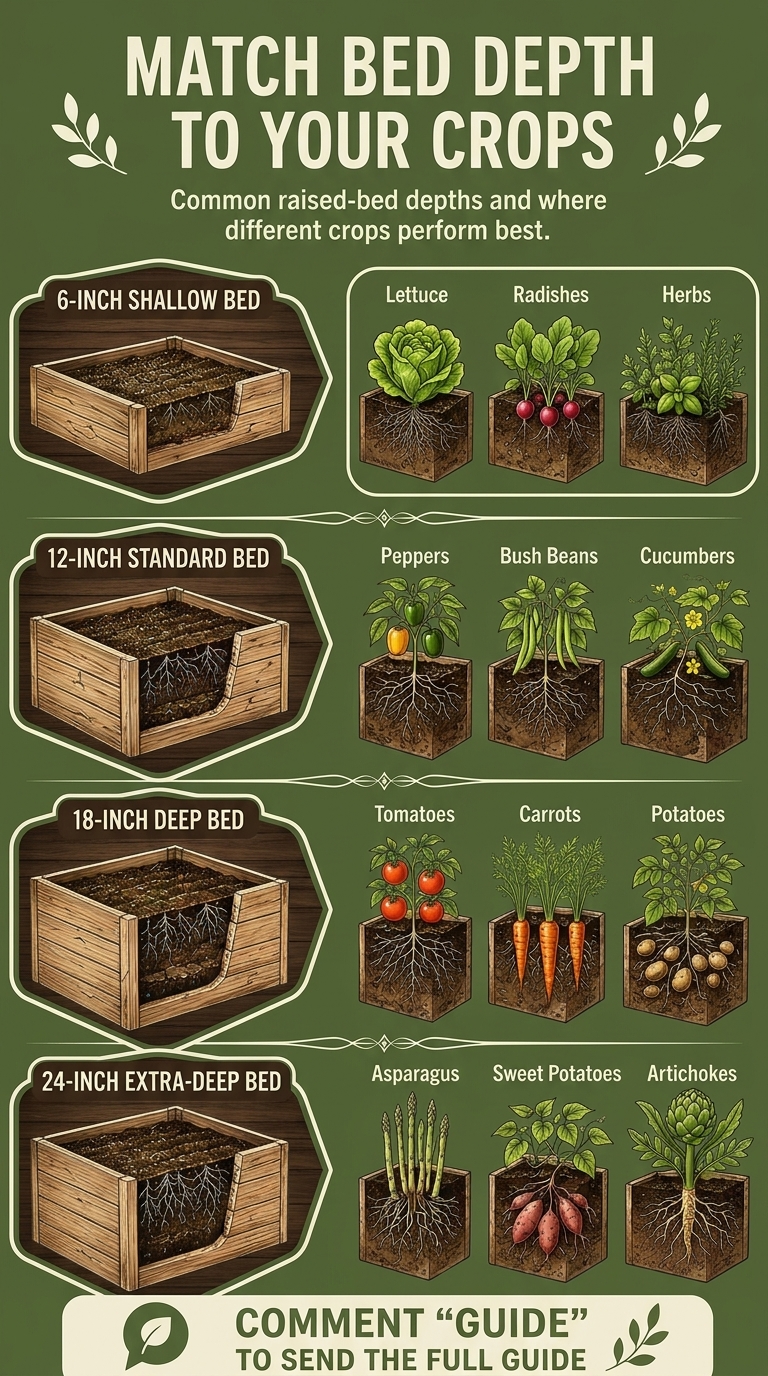
Shallow Beds (6 to 8 Inches): The Quick-Growth Zone
Shallow beds are an excellent choice for crops that have brief life cycles or compact root systems. Because there is less soil to warm up in the spring, these beds heat quickly, making them perfect for early-season starters. This depth provides enough soil for adequate moisture retention without the bulk of heavy structural building.
- Lettuce and Leafy Greens: These crops have dense but shallow, fibrous root systems that do not need deep penetration to reach maturity.
- Radishes: As one of the fastest-growing vegetables, radishes stay near the surface and flourish in loose, light soil.
- Herbs: Many culinary herbs like chives, cilantro, and parsley prefer a smaller, well-drained footprint.
Standard Beds (10 to 12 Inches): The Versatile Middle Ground
For most home gardeners, a standard 12-inch bed is the “goldilocks” zone. This depth accommodates the majority of popular vegetable garden staples. It offers enough soil volume to stay consistent in temperature and moisture throughout the fluctuating summer months, which is essential for fruiting vegetables that require stability to produce quality harvests.
- Peppers: Bell and chili peppers appreciate the moderate depth, which allows them to stay upright and stable during the heavy fruit-set stage.
- Beans: Whether bush beans or pole varieties, these legumes thrive in a foot of soil that provides enough space for nitrogen-fixing root nodules to develop.
- Cucumbers: While cucumbers have a trailing vine habit, their root systems are relatively compact, making them perfect for this standard depth.
Deep Beds (18+ Inches): The Foundation for Heavy Feeders
Deep beds are a significant investment, but they are essential for long-season crops or vegetables that grow downward rather than outward. Deep soil prevents root deformation and ensures that the plant can tap into consistent moisture levels even during the driest weeks of August. If you are building on top of hard, compacted clay soil or a driveway, deep beds are the only way to provide enough room for root crops to grow straight and healthy.
- Carrots: To avoid twisted or stunted carrots, you need deep, loose soil that is free of obstructions. A depth of 18 inches allows even long varieties to reach their full potential.
- Tomatoes: Tomatoes are deep-rooting powerhouses. While they can grow in shallower soil, they will be much more drought-tolerant and productive if they have 18 to 24 inches of soil to explore.
- Potatoes: Potatoes need space for tubers to form beneath the surface. Deep beds allow for easy hilling and provide plenty of room for a high-volume harvest.
Practical Tips for Implementation
If you are building your garden from scratch, consider designing a tiered system. Place your deeper beds in the center or back of your garden layout to avoid shading shorter crops, and keep your shallow herb and lettuce beds near the edges for easy access during harvest. If you already have beds built that are shallower than your preferred crop requires, consider using “mounded” soil techniques or planting on the edge of the bed to allow roots to grow deeper into the ground soil beneath. Always ensure that the soil quality remains consistent throughout the depth of the bed; avoid filling the bottom with heavy, non-decomposed materials that might impede root penetration. By respecting the root requirements of your vegetables, you provide the structural foundation for a truly productive garden.