


When you are planning a container garden, the allure of trendy pots or recycled crates can often overshadow the most critical factor for plant health: soil depth. While it is easy to assume that all vegetables can thrive in any vessel, the reality is that different plants have vastly different architectural needs beneath the surface. Failing to match your container’s depth to the root system of your crop is one of the most common reasons for stunted growth, poor yields, and early plant death.
Why Container Depth Matters
Plants rely on their root systems for two primary functions: structural stability and nutrient uptake. When a plant is confined to a container that is too shallow, its roots reach the bottom and begin to circle, becoming root-bound. This restricts the plant’s ability to access the moisture and nutrients it needs to produce flowers and fruit. Conversely, if you place a shallow-rooted plant in an overly deep container, you risk water-logging the soil, as the unused deep soil holds onto excess water that the roots cannot reach, leading to root rot. By choosing the right depth, you provide a Goldilocks environment where moisture levels are balanced and roots have the space to expand naturally.
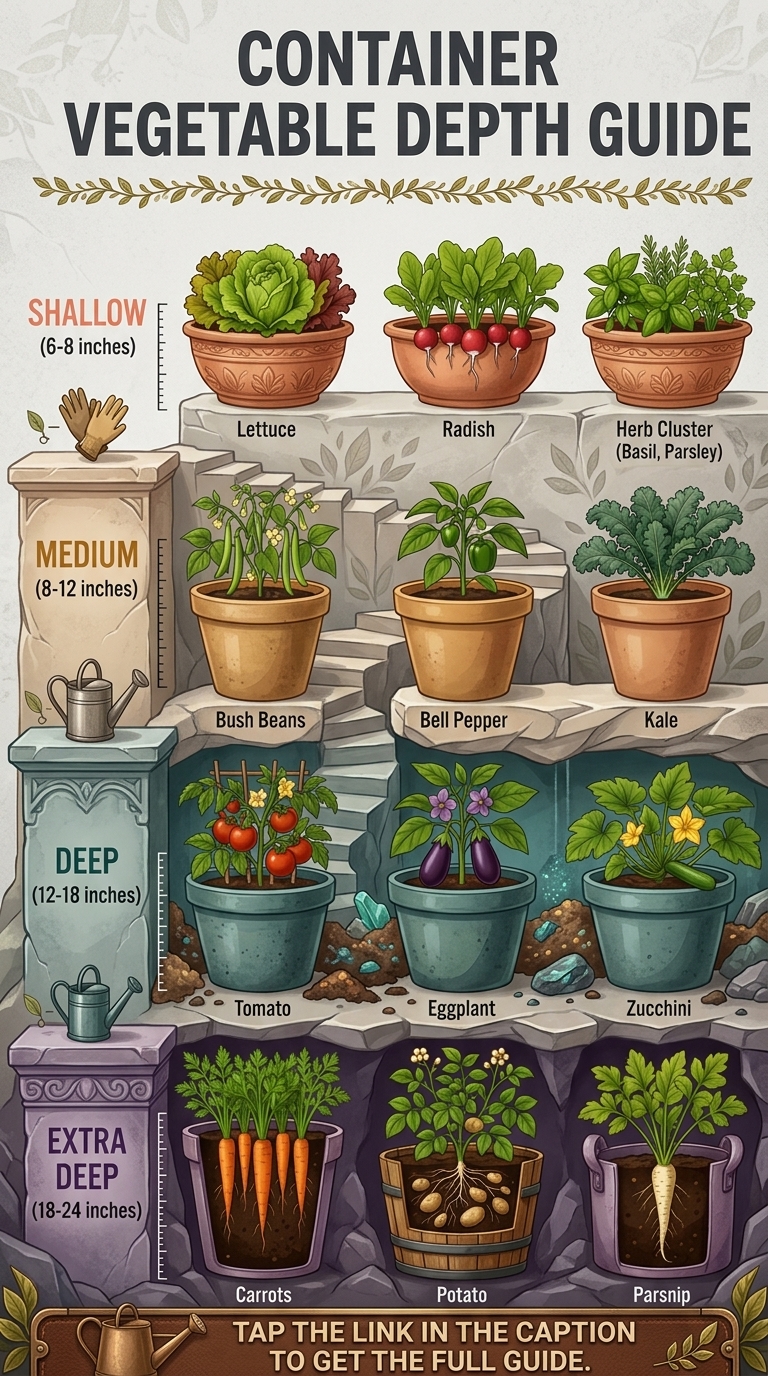
Shallow Containers: 6 to 8 Inches
Plants with shallow root systems are often your best candidates for rapid turnover and frequent harvests. Because these plants do not anchor deeply, they are perfect for window boxes, shallow trays, or recycled kitchen containers. The key is ensuring consistent moisture, as shallow soil dries out faster than deep soil.
- Lettuce and Leafy Greens: Since you are harvesting the leaves and not a heavy fruit, these plants don’t need significant root space.
- Radishes: These root vegetables mature quickly and don’t require deep soil to swell to harvest size.
- Herbs: Varieties like chives, cilantro, parsley, and basil thrive in shallow environments.
Medium Containers: 10 to 12 Inches
This is the workhorse depth for the majority of mid-sized garden vegetables. When you provide ten to twelve inches of soil, you are giving the plant enough room to develop a sturdy enough root system to support foliage and modest fruit production. These pots are ideal for balconies and patios because they offer a good compromise between soil weight and plant productivity.
- Beans: Bush beans perform exceptionally well at this depth, providing a high yield in a relatively compact space.
- Peppers: Both bell peppers and hot peppers are happy in medium containers, provided they are given enough sunlight to fuel their fruit production.
- Kale and Chard: These sturdy greens develop deep, fibrous root systems that appreciate the extra room to stretch out compared to lettuce.
Deep Containers: 14+ Inches
For high-performance crops—those that require significant energy to produce large fruits or substantial root development—you cannot cut corners on depth. Large containers provide a massive reservoir of nutrients and moisture, which is essential for heavy feeders that will be in the ground for most of the season.
- Tomatoes: Whether you are growing determinate or indeterminate varieties, tomatoes have aggressive root systems. Deep pots provide the structural support needed to keep tall plants upright.
- Eggplants: Much like tomatoes, eggplants are nightshades that demand significant root space to support their large fruits.
- Zucchini and Summer Squash: These plants are often underestimated. They grow rapidly and require substantial moisture; a deep container ensures they don’t wilt during the heat of a summer afternoon.
Practical Tips for Success
Beyond just the depth of the pot, keep these best practices in mind to maximize your harvest. First, always prioritize drainage. Regardless of the container depth, if water cannot escape, the soil will turn anaerobic and kill your roots. Every pot must have drainage holes. Second, remember that container soil is a finite resource. Because nutrients leach out with every watering, container-grown plants require more frequent fertilization than those grown in the ground. Use a balanced, water-soluble organic fertilizer every few weeks to keep your plants thriving. Finally, consider the weight. A large, deep container filled with wet soil can be incredibly heavy. If you are gardening on a balcony or a wooden deck, ensure the surface can support the load before you begin planting. By matching the container depth to your specific plant, you create a harmonious environment that allows your vegetables to reach their full potential, resulting in a more productive and enjoyable gardening season.