


Every gardener knows the excitement of spotting that very first blossom on a tomato, pepper, or squash plant. It feels like a triumph, a signal that your hard work in the soil is finally paying off. However, experienced growers often perform a counterintuitive act: they reach out and snip those early flowers away. While it might feel like you are sabotaging your harvest, this practice is actually a strategic maneuver designed to produce a significantly more bountiful yield later in the season.
The Biology Behind the Bloom
To understand why removing early flowers is beneficial, we must look at how a plant allocates its energy. When a plant is young, its primary goal is to establish a robust infrastructure. It needs a complex, deep root system to pull nutrients from the soil and a strong, leafy canopy to capture sunlight for photosynthesis. This vegetative growth phase is the foundation upon which your entire harvest rests.
When a young plant begins to flower, its hormonal signaling shifts. The plant decides that it is time to reproduce. Producing fruit is an incredibly energy-intensive process. Once a plant sets fruit, it shifts its priority away from building roots and stems and toward ripening seeds. If you allow a small, underdeveloped plant to bear fruit, it stops focusing on its own survival and starts focusing on its progeny. This often leads to stunted growth, a smaller plant, and a shorter overall harvest window.
How to Implement Early Pruning
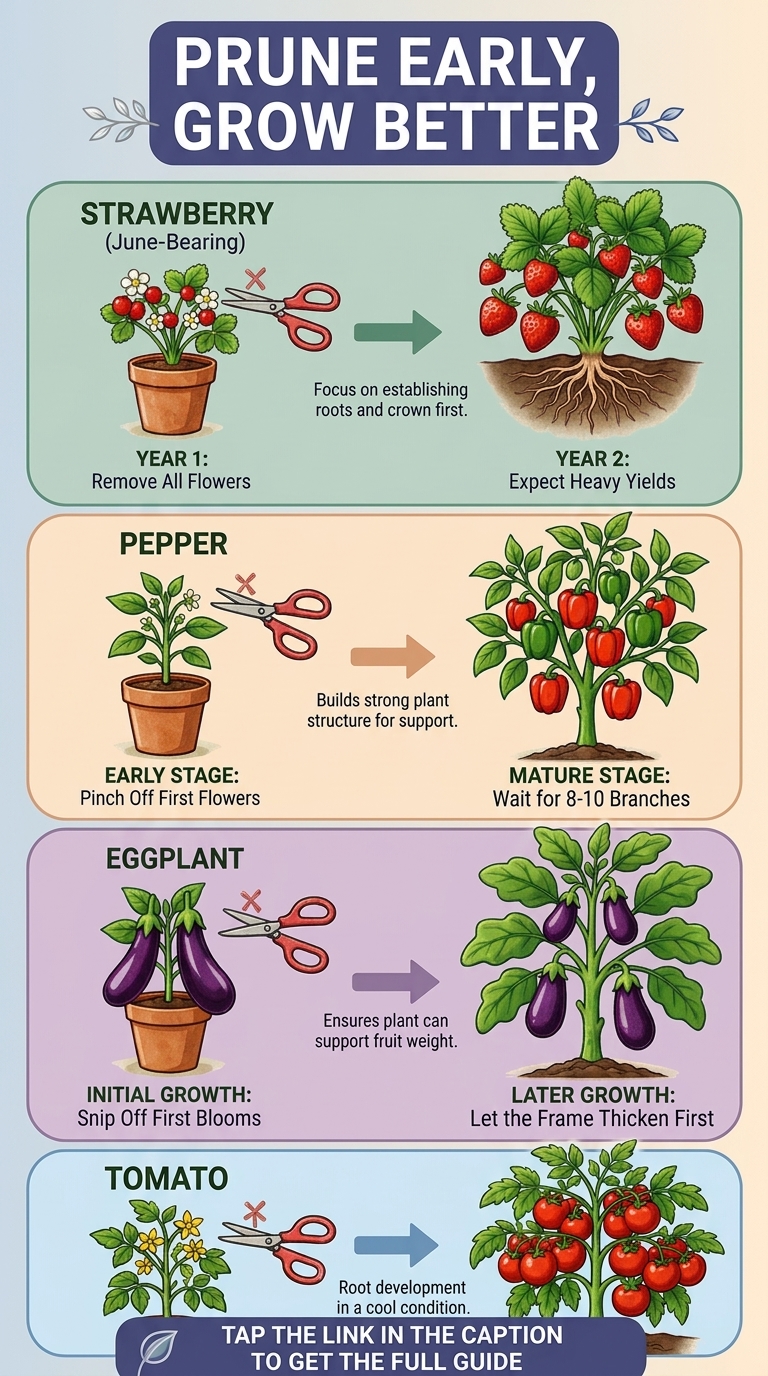
Timing is everything when it comes to early pruning. You do not need to prune flowers forever; the goal is simply to delay the transition to reproduction until the plant has reached a sufficient size.
- Monitor your transplants closely after they have been moved into the garden.
- For crops like tomatoes and peppers, pinch off any flowers that appear within the first two to three weeks after planting.
- Wait until the plant has added at least 6 to 10 inches of new vegetative growth before allowing it to set fruit.
- Use sharp, clean garden shears or your thumbnail and forefinger to cleanly remove the bud at the base.
By forcing the plant to remain in a vegetative state a little longer, you are essentially telling it: “There is plenty of time for fruit later; right now, focus on growing deep, extensive roots.”
The Long-Term Rewards
The benefits of this practice become clear mid-to-late season. Because the plant spent those initial weeks focusing on root development, it is now better equipped to handle stress. A stronger root system means better drought tolerance, more efficient nutrient uptake, and a more resilient plant that can support a much higher volume of fruit without toppling over or suffering from fatigue.
Think of it as a long-term investment. You are sacrificing a handful of early-season fruits—which are often smaller and less flavorful anyway—in exchange for a massive, sustained harvest during the peak of the season. Plants that are allowed to develop fully before setting fruit tend to have more nodes, which means more potential flowering sites, ultimately leading to a much higher total yield by the time the first frost arrives.
When to Stop Pruning
It is important to know when to let nature take its course. Once your plant has reached a healthy, sturdy size—generally when it looks bushy and has established a strong main stem—you can stop pinching off the blooms. At this point, the plant has enough energy stored in its roots and foliage to support both continued growth and the development of high-quality fruit.
By mastering the art of the early prune, you shift your role from a passive observer to an active steward of your garden. It requires a bit of discipline to snip away those first signs of success, but your garden will reward your patience with a much more prolific and sustainable harvest.